
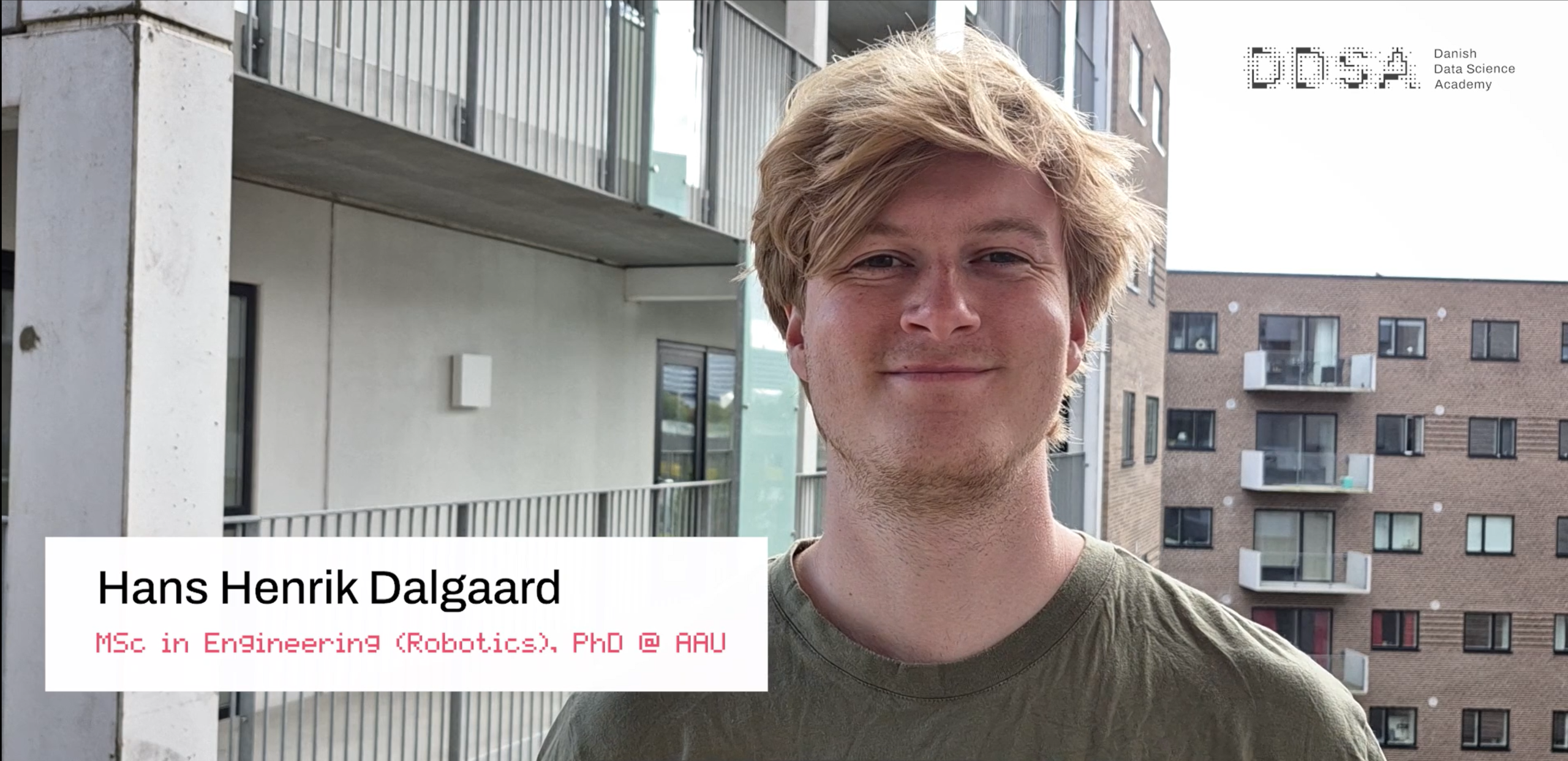
Hans Henrik Dalgaard
ABSTRACT:
Lower-limb amputations affect millions of people worldwide, with over 1000 new cases in Denmark each year. It has profound consequences for patient mobility, independence, and quality of life. Despite decades of progress in both hardware and software, natural prosthetic control remains a bottleneck in the current state-of-the-art. This comes with numerous negative short and long-term effects, such as accelerated osteoarthritis and pain.
This project proposes Neural AI-driven Terrain-Adaptive bionic Limb (NATAL): a bionic leg that utilizes cloud computing and AI-driven computer vision to learn from the user’s environment, thereby continuously improving its performance during use. Online model retraining will be performed using 5G connection to centralized cloud resources, circumventing the usual computational restrictions associated with embedded control systems of bionic limbs.
The project will be executed in four phases. First, a strong theoretical foundation will be established, surveying the state-of-the-art terrain-prediction, continual learning methods, and cloud computing. Next, a large, structured dataset of real multi-modal gait data will be collected, serving as the foundation to train the terrain recognition models. Finally, a full NATAL prototype will be developed using AAU cloud infrastructure and validated on real users (persons with amputation) in, as well as outside, the lab.
This project will be conducted within the Neurorehabilitation Systems research group (main supervisor) in tight collaboration with the Edge Computing and Networking research group (co-supervisor), reflecting the truly cross-disciplinary nature of the proposed research.
The presented PhD project has the potential to revolutionize prosthetic control, creating a paradigm shift towards smarter, context aware bionic legs. Furthermore, it is directly applicable to related fields, including exoskeletons, upper-limb prosthetics, and other assistive technologies. Ultimately, NATAL will improve the mobility and quality of life of persons with amputations and sensorimotor impairments and thereby decreasing the associated long-term rehabilitation costs.