
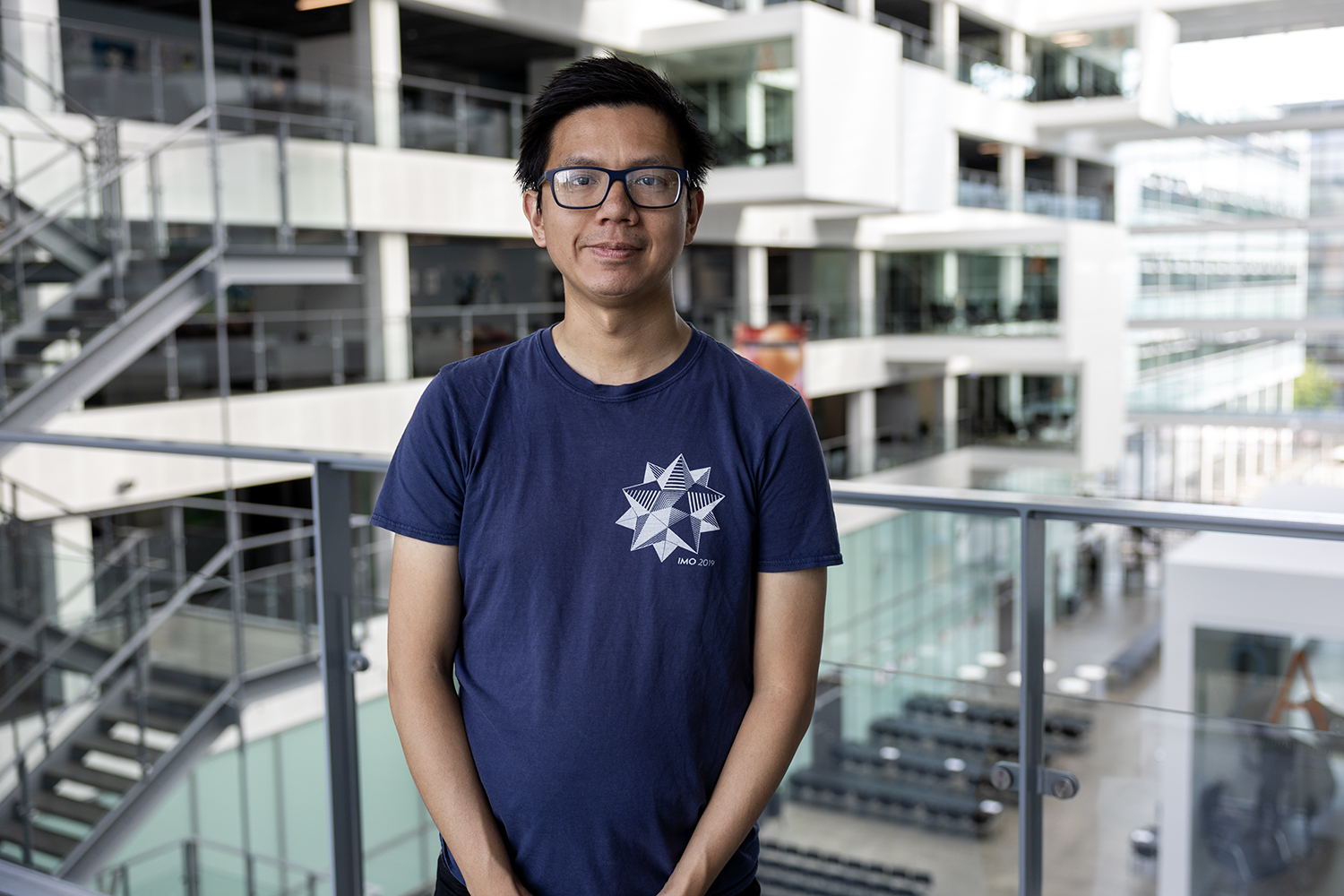
Sampson Wong
ABSTRACT:
In an era of continuous measurement, from wearable sensors and electronic health records to high-throughput biological assays and environmental monitors, data is inherently temporal. These growing archives of time-stamped observations contain the raw material for answering fundamental scientific questions and driving data-informed decision-making. Yet, the core challenge remains a foundational one: How do we cope with the enormous amounts of data being collected, and how do we mine these vast temporal data sets to extract information?
This project addresses these fundamental questions by establishing a new class of algorithms designed explicitly for the robust and scalable data mining of temporal data sets. Our research is structured around two complementary objectives: to preprocess the data set to make it more tractable to analyse, and to mine the data set to discover hidden patterns.
A) Compressing temporal data streams. We will design a robust and memory-efficient compression algorithm that selectively discards data points from a temporal data stream, so that the compressed subsequence remains similar to the original. A key challenge is that existing similarity measures, such as Dynamic Time Warping, are sensitive to sampling rate and are therefore unsuitable for comparing the similarity of subsequences with the original.
B) Pattern discovery in large temporal data sets. We will design efficient algorithms to identify recurrent patterns within temporal data sets through clustering of time series subsequences. A fundamental limitation of popular similarity measures is that they match entire sequences; we will generalise these measures to match subsequences to one another, enabling the discovery of patterns that occupy only a portion of a time series.
By focusing on the fundamental principles underpinning these temporal data analysis tasks, this project will deliver a versatile and durable toolkit for data analysis for years to come.