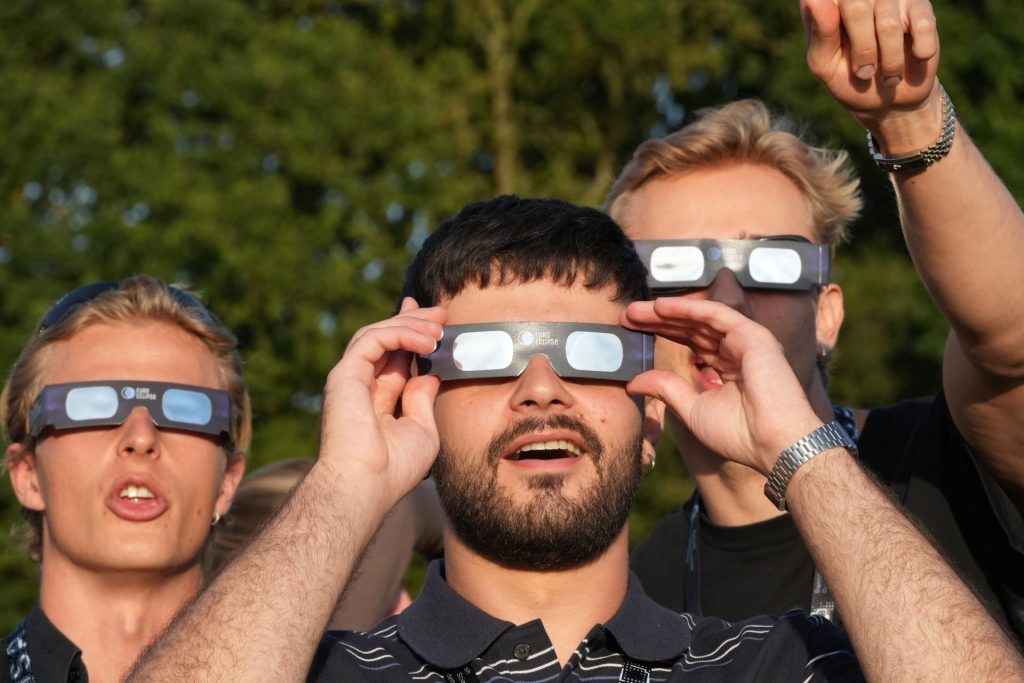
“My dream is to pursue a PhD where I can use data science to explore how climate change affects migration around the world,” says Nudmila Chowdhury, who studies Social Data Science at the University of Copenhagen.
“I originally studied psychology. If we combine data science methods with psychological data, I believe we can achieve remarkable things,” says Magnus Simoni Jahn, a Data Science student at the University of Southern Denmark.
“People with persistent low back pain can respond in different ways to Cognitive Functional Therapy. Can we predict who will benefit from the treatment, and what do those who respond well have in common? That’s one of the questions I’d love to better understand with the use of Data Science. That might be a topic for a future PhD,” says Nellie Eller, who also studies Data Science at the University of Southern Denmark.
“Homicides are a major challenge for societies. I am considering a PhD in Data Science where computational methods could help us better understand and address this issue,” says Alina Ibragimova, who studies Communication Science at the University of Vienna, Austria.
Four students. Four very different ambitions. Yet all share a belief that data science could play a crucial role in tackling some of society’s most pressing challenges.
They also share another question: could a PhD in Data Science be the right next step?
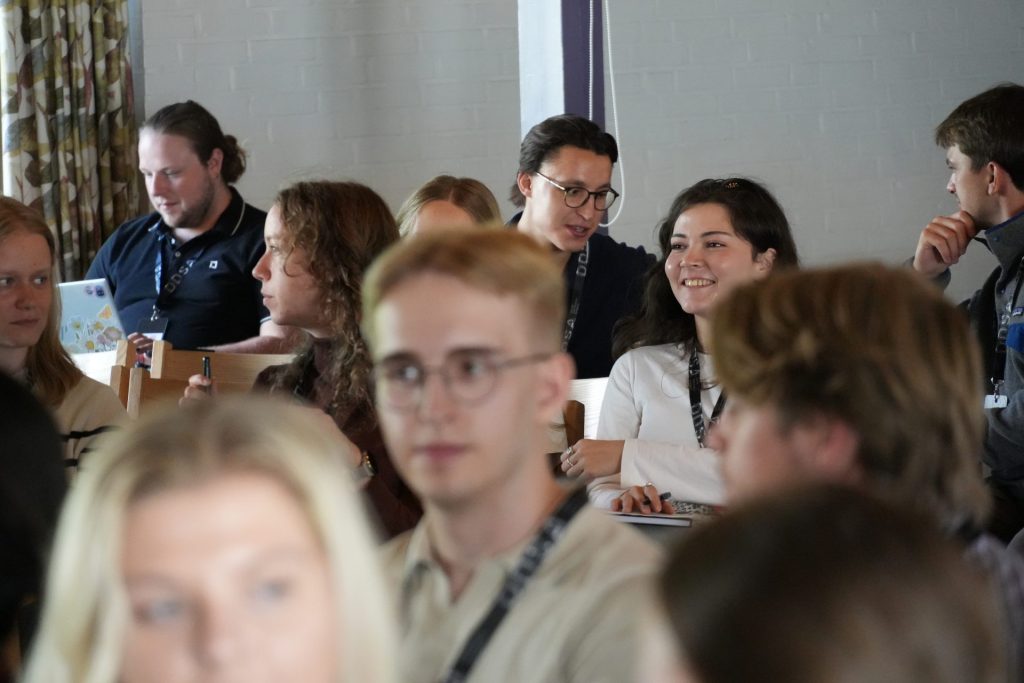
Questions such as these were at the heart of the DDSA Pre-Graduate Retreat, held at Rødding Højskole on 12-13 August. Here, 36 master’s students from data science and related disciplines gathered alongside 13 volunteer speakers and organisers ranging from PhD students and senior researchers to experienced data science professionals.
For many participants, the retreat offered a rare opportunity to gain honest insights into life as a PhD student. What is it really like to do a PhD? What challenges should you expect? How do you successfully complete one? And what career opportunities lie beyond academia?
“The purpose of this annual event is to give master’s students the opportunity to explore whether a PhD in Data Science could be part of their next step,” says Sniff Andersen Nexø, Education & Grant Manager at DDSA.”
She continues:
“The Retreat offers valuable insights into data science research and career paths through the experiences of more established data scientists. At the same time, the informal setting creates a safe and open space where students, speakers, and organisers can engage in honest”
A retreat offering many perspectives
However, not everyone attended because they were uncertain about their future.
Nicholas Kryger-Nelson, who studies Mathematical Modelling and Computation at the Technical University of Denmark (DTU), already sees a PhD as a likely next step.
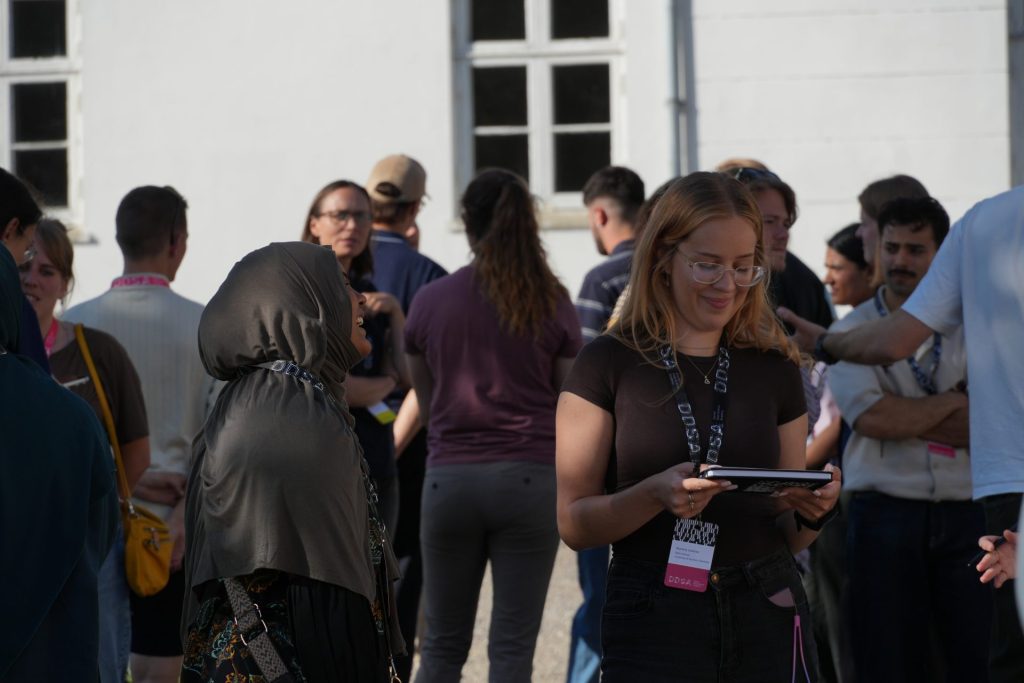
“I want to do a PhD, so this retreat really speaks to me. I’ve attended summer schools before, but what’s valuable here is hearing from people at different stages of their careers. It’s especially interesting to listen to researchers who completed their PhDs years ago and can talk about life afterwards. I hope to draw on these experiences in the near future. What I’ll take away from this retreat are concrete examples and valuable context.”
During a break at the retreat, Nicholas sits on the lawn in front of the historic white main building of Rødding Højskole, the world’s oldest folk high school, founded in 1844.
Beside him is Renata Piatkova, who studies Bioinformatics at DTU and is still considering her options.
“I came here to understand what might be the right path for me and how to build a career. I tend to overthink things, so it has been reassuring to hear that a PhD can be quite flexible and that careers don’t follow a fixed route. I still need time to figure out what I want. Even if I decide today that I want to do a PhD, that decision could change later on,” she says.
Volunteers giving back to the community
Across DDSA’s many activities, a strong culture of volunteering and community engagement continues to stand out.
Many researchers and professionals contribute their time because they want to support the next generation of data scientists while strengthening connections across Denmark’s data science ecosystem.
Last year, 12 volunteers contributed to the Pre-Graduate Retreat, affectionately known as “Pre-Grad”. This year, the number was 13. The speakers represented a broad spectrum of experience, including professors, CEOs, PhD students and senior data science professionals.
One of them was Line Clemmensen, Professor at the Department of Mathematical Sciences at the University of Copenhagen. Since the retreat was first launched, she has volunteered her time each year to share insights from both academia and industry, including experience from start-ups and large corporations.
Asked why she continues to return, she says:
“The students are so engaged and approach their careers and the field with great curiosity. I love to be part of that and share my own learning. I have also had collaborations with several students interested in my research following the treat.”
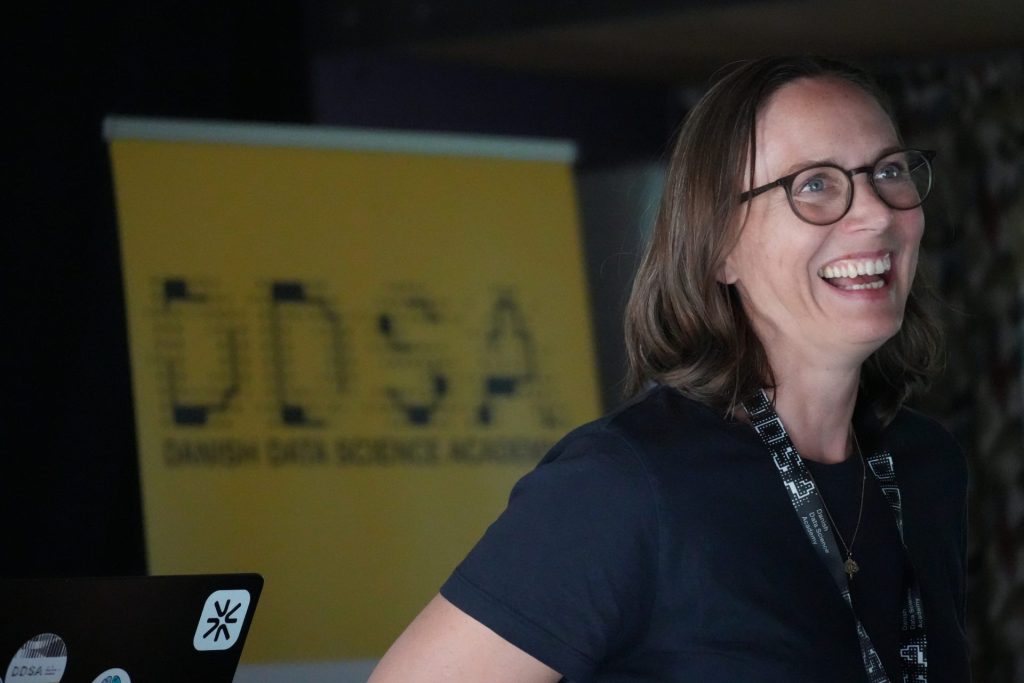
Another volunteer is Livie Li, a PhD student at Aarhus University and Steno Diabetes Center Aarhus.
“First of all, the feedback from the students are important. I hear how much they appreciate the insider information, such as the everyday life and the ups and downs that might wait for them. I also enjoy the fellow volunteers, we have a wonderful community at DDSA Young Academy Panel, to plan and to see the plan come to life is also very rewarding.”
Valuable lessons and important takeaways
Over the course of the retreat, participants gained insights into the many different routes into a PhD in Denmark, including opportunities such as Industrial PhDs.
Several speakers also reflected honestly on the challenges they had encountered along the way.
Esben Bay Sørensen, a PhD student at the University of Southern Denmark, noted that one lesson he learned was the value of seeking advice early.
Looking back, he particularly valued the guidance and support he received from senior PhD students, whose experience helped him navigate challenges and foster valuable collaborations throughout his PhD.
For participant Nellie Eller, the retreat ultimately helped confirm her ambitions:
“The more I heard during Pre-Grad, the more convinced I became that a PhD is the right fit for me. I’m curious by nature and I love exploring questions in depth. A PhD gives you the opportunity to truly immerse yourself in a topic. I met so many inspiring people here, and the entire retreat was exceptionally well organised. You could tell that DDSA had carefully considered who to invite as speakers and what experiences participants would benefit from hearing about.”
As the retreat drew to a close, students left with new perspectives, broader networks and, for many, a clearer sense of whether a future in research might await.