
What do the skills, diversity, and extraordinary dedication of Denmark’s data science community look like in practice?
The answer was on full display on August 24-25 at the DDSA Summer Celebration at Brandts Kunstmuseum in Odense, where the overall theme was “Time Machine.”
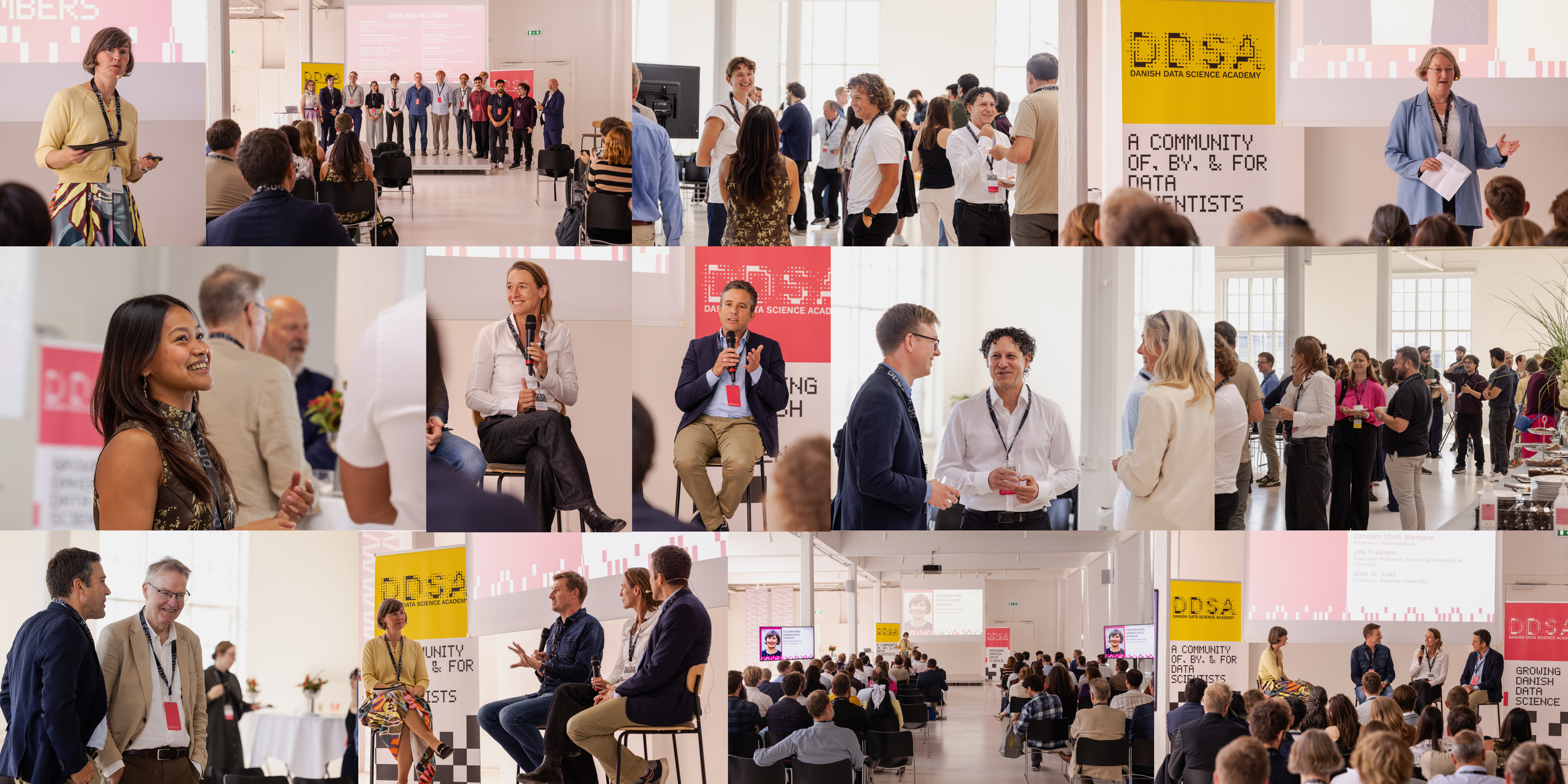
Data science experts, PhD students, postdoctoral researchers, professors, industry leaders, public sector specialists, and many others from different countries and generations came together to celebrate a shared journey. Standing among more than a hundred participants from the DDSA community and its extended network, one thought was impossible to ignore:
“These are the many colours of the data science community in Denmark. These are the colours of DDSA. What a highly professional and diverse group of people, united by one common passion: advancing the use of data science in Denmark.”
This year’s Summer Celebration was particularly special. It marked DDSA’s first five years of successfully building a strong national community across disciplines, supporting collaboration between sectors, and fostering the next generation of data science talent. At the same time, the event offered an opportunity to look ahead and imagine what the next five years might bring.
Staggering Achievements in the First Five Years
And what a five-year journey it has been.
In her welcome address, DDSA Managing Director Marie Helene Andersson reflected on the organisations’ remarkable development:
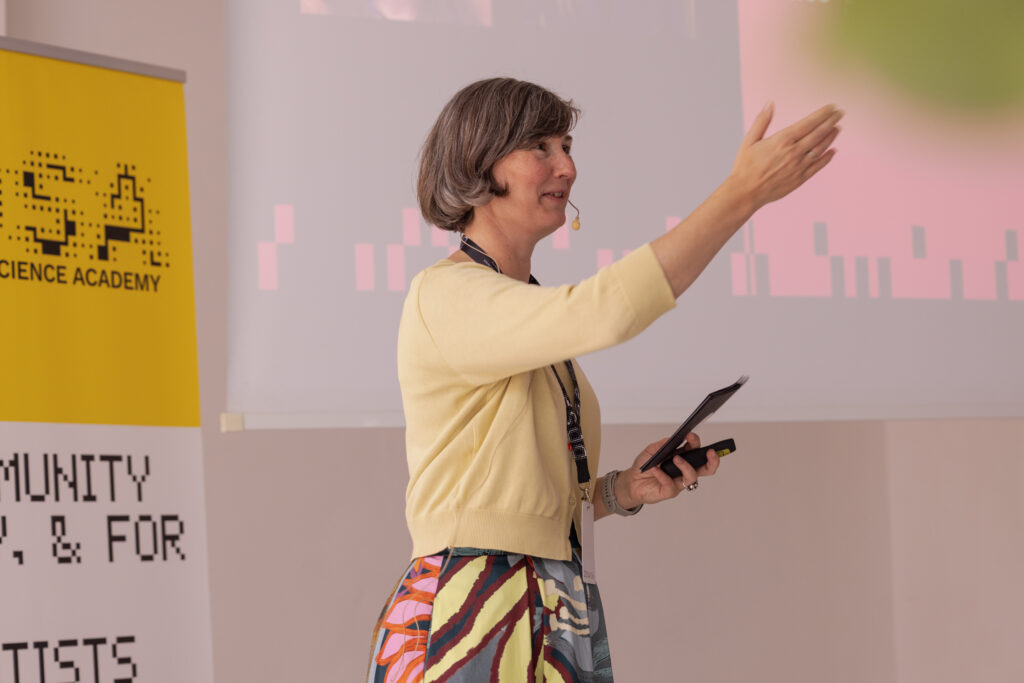
“During this period, DDSA has achieved several significant milestones in bringing together people working with data science and in growing data science as a discipline across domains and sectors. What an incredible community we all have built around Data Science in Denmark.”
The milestones Marie Helene Andersson was referring to include:
- 78 Fellows who have collectively published more than 100 scientific publications
- More than 200 pre-graduate students introduced to the possibility of pursuing a PhD as their next career step
- More than 300 mentoring pairs established through DDSA’s Mentoring Programme
- More than 400 Mobility Grants awarded
- More than 150 events held, engaging approximately 5,000 participants from the Danish data science community
- Four national D3A conferences organized in collaboration with DIREC and The Pioneer Centre for AI
DDSA is a truly community-driven, bottom-up organisation. It is the result of years of collaboration involving researchers and practitioners from across Denmark and is therefore deeply rooted in the country’s data science ecosystem.
Supported by generous grants from the Novo Nordisk Foundation and the Villum Foundation, DDSA has reached a number of important milestones over its first five years, helping strengthen Denmark’s position as a leading data science nation and creating new opportunities for researchers, students, and professionals across disciplines.
Showing Pathways and Cases in Data Science
The next speakers to take the stage were Madeleine Wyburd, Postdoctoral Researcher in Computer Science at the University of Copenhagen, and Kate Escobar, PhD researcher at the University of Copenhagen. As DDSA fellows, they shared inspiring examples of how a passion for data science can be transformed into research with real-world impact and how the DDSA fellowships have furthered their careers.
Madeleine Wyburd presented her work on cerebral palsy, the most common motor disability in children, caused by injury to the developing brain.
“Early diagnosis leads to better outcomes. My research investigates whether infant neuroimaging can help detect cerebral palsy at an earlier stage,” she explained.
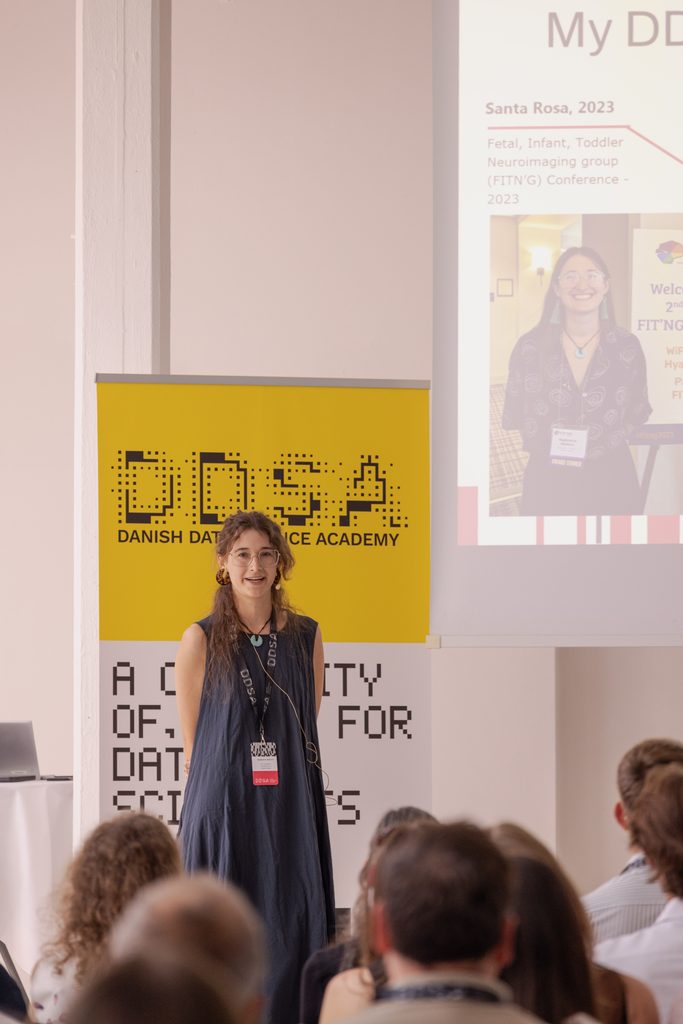
Her work illustrates how data science is helping advance healthcare and medical research. Neuroimaging generates vast amounts of complex data that require sophisticated data processing, statistical analysis, and machine learning methods to identify patterns that may otherwise remain hidden. By combining clinical expertise with advanced analytics, researchers can develop new tools that support earlier diagnosis and improved patient outcomes.
The presentation highlighted how data science is not only a discipline in itself, but also acts as an enabling discipline that creates value within another discipline.
This cross-disciplinary impact was equally evident in the presentation by Kate Escobar, who explored how machine learning can contribute to more sustainable agriculture. Drawing inspiration from nature itself, her research demonstrates how data-driven approaches can help scientists develop better and more resilient crops to meet future challenges related to food production, climate change, and growing global demand.
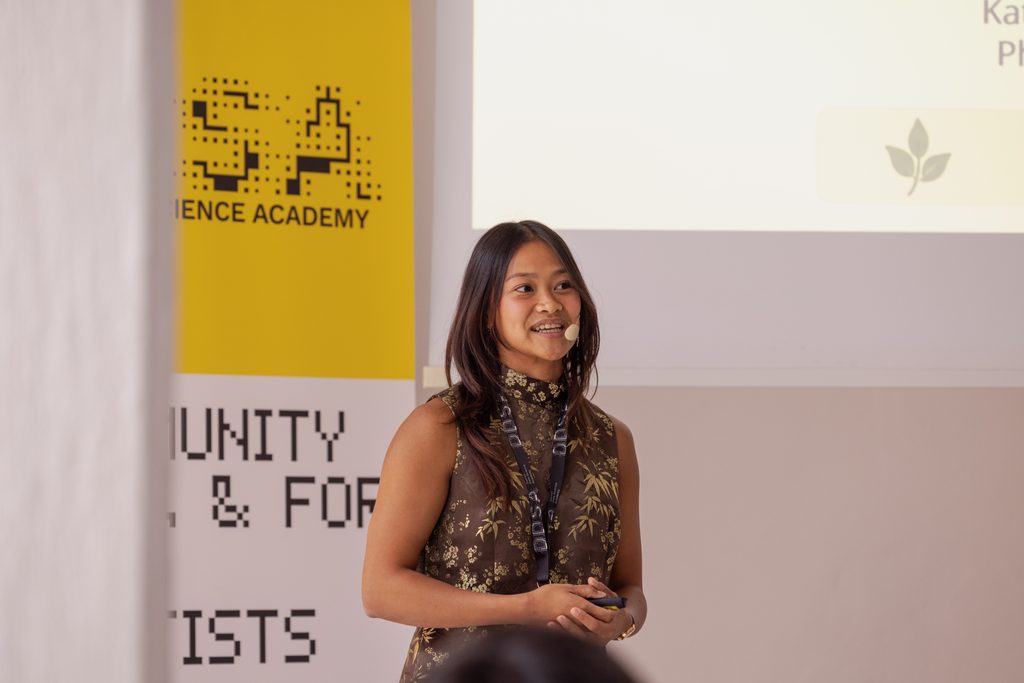
“For thousands of years, humans have been running one of the largest biological experiments in history – transforming wild plants into crops. But today, despite the enormous diversity of plant species around us, much of our food supply still depends on only a few major crops, such as rice, wheat and maize. So, what if we could speed up a process that once took thousands of years? Can machine learning and data science help us domesticate new crops faster? That is one of the questions at the heart of my case,” she said.
Together, the two presentations showcased the breadth of modern data science, from improving healthcare outcomes for children to helping secure the future of agriculture. They also reflected DDSA’s mission of supporting talented researchers who apply data science to some of society’s most important challenges.
Spotlight on DDSA’s 16 New Fellows
One of the highlights of the Summer Celebration came when Kåre Lehmann Nielsen, Chair of the DDSA Fellowship Evaluation Committee and Professor of Chemistry and Bioscience at Aalborg University, took the stage to explain the rigorous process behind selecting DDSA fellows.
Each year, DDSA receives applications from a large number of highly qualified candidates. Following a comprehensive evaluation and scientific interview process conducted by the Fellowship Evaluation Committee, only a limited number of applicants are ultimately awarded fellowships.
It was therefore a proud and celebratory moment when Kåre Lehmann Nielsen invited the 16 newly appointed DDSA fellows to the stage: 10 PhD Fellows and 6 Postdoctoral Fellows.
The audience was introduced to the new fellows through a video presentation highlighting their research projects, which reflected the remarkable breadth and diversity of data science research in Denmark.
The projects spanned topics ranging from artificial intelligence and communication to molecular biology and astrophysics. Titles included “Show, Don’t Tell: Towards Visual Dialogue in AI”, “Safeguarding the Dark Genome: Modelling DNA Methylation Maintenance at Repeats”, “Revealing Hidden Memory in Black Hole Binaries Through Machine Learning”, and “Scaling Generative Enzyme Synthesis (GenES).”
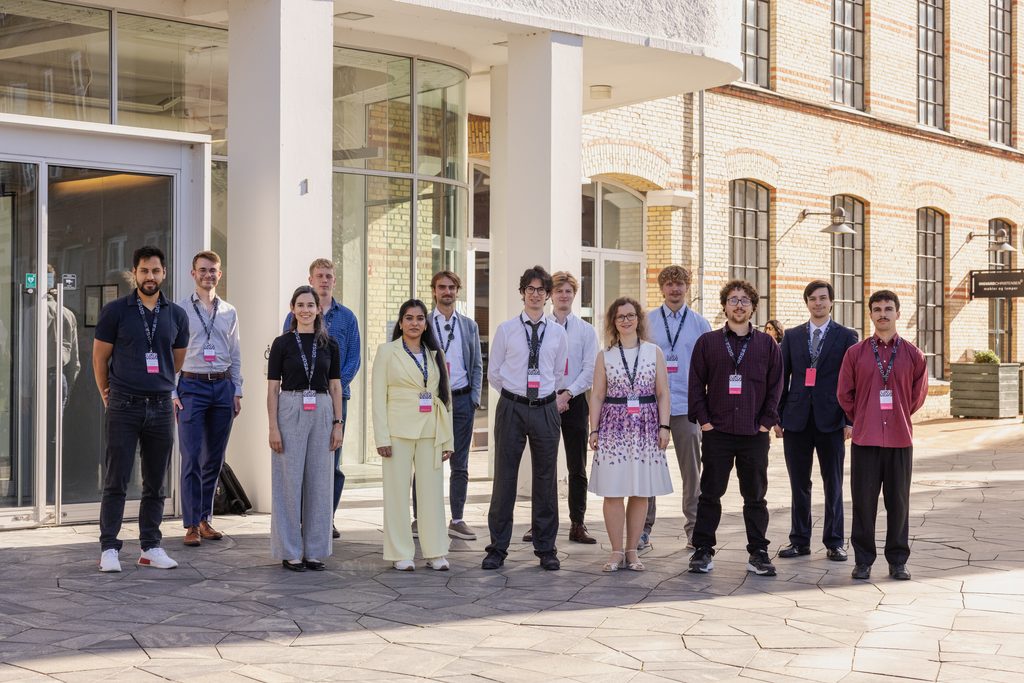
Together, the projects showcased how data science is driving innovation across disciplines and contributing to the understanding of some of society’s most complex scientific challenges.
A Trip in the Time Machine
Under the overall theme of “Time Machine” a panel discussion featuring Carsten Utoft Niemann, Professor at Rigshospitalet, Jes Frellsen, Associate Professor at the Technical University of Denmark, and Sine N. Just, Professor at Roskilde University, followed. All three serve on DDSA’s Board and brought perspectives from healthcare, engineering, and the social sciences.
The panel reflected on how data science has evolved in recent years and discussed the opportunities, responsibilities, and values that should guide its future development. The theme was particularly fitting as DDSA celebrated five years of impact while looking ahead to the next chapter of its journey.
The celebration was rounded off with Managing Director Marie Helene Andersson outlining the cornerstones of the next five years of DDSA from 2027 to 2031. Focus will be on continuing helping the individual’s development and strengthening the network and collaboration among data science professionals, and with the addition of more outreach to the public.
Senior Director Ulla Gro Nielsen, from Novo Nordisk Fonden was invited on stage for the final remarks on why the foundation has decided to continue to support DDSA because the organisation makes a positive difference to people and to Denmark.
Discussing the Future of Data Science in Denmark
While the first day focused on celebrating achievements and recognizing new talent, the second day saw the community acting in practice.
One session brought together current and newly appointed DDSA fellows for a Fellows Meet-up. The session combined professional networking with a healthy dose of humor, as participants were challenged to present another fellow’s PhD project in just one minute. The exercise highlighted both the diversity of research topics within the community and the importance of communicating complex science in engaging and accessible ways.
At the same time, members of DDSA’s governing bodies, including representatives from its committees, panels, and board, met to discuss how these groups can work even more effectively to support and grow the Danish data science ecosystem.
Following three hours of discussions, DDSA Managing Director Marie Helene Andersson emphasized the value of the insights generated during the workshop sessions.
“We have received a great deal of constructive and valuable input today. We will now continue working with the many ideas and suggestions that have emerged, and we look forward to seeing many of them come to life during DDSA’s next five-year chapter.“