
A DDSA-funded research visit of Sebastian Mair, an Assistant Professor at Linköping University in Sweden, has led to an extensive research collaboration in Denmark focused on making AI development more energy-efficient and sustainable.
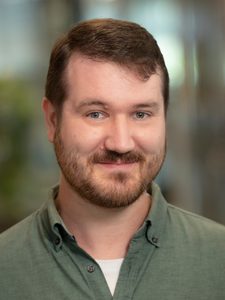
“I had noticed that Raghavendra Selvan from the University of Copenhagen shared my interest in data-efficient and sustainable machine learning. As I was travelling to Germany, I stopped in Copenhagen to have lunch with him, and we ended up talking for three hours. After that meeting, I knew we had several things we could work on together,” Sebastian explains about his first encounter with Raghav, as Raghavendra Selvan, Tenure-track Assistant Professor at the Department of Computer Science at the University of Copenhagen, prefers to be known.
Sebastian continues:
“Too few people involved in AI development focus on energy consumption. Instead, the industry behind AI development talks about scale, scale, and scale. We believe it is time to stabilise the development we are seeing today and see it more holistically.”
Sebastian Mair and a group of colleagues share a concern about the energy consumption associated with AI. A UN report indicates that AI accounted for around 20% of total electricity use in data centres in 2025, with that figure expected to double to 40% by 2030.
AI Development Must Be Viewed More Broadly
DDSA awarded Sebastian a Visit Grant of DKK 15,000 (approximately EUR 2,000), enabling the German Assistant Professor to spend an initial two-and-a-half weeks with Raghav. He subsequently extended his stay beyond the funded period at his own expense. During his DDSA-funded visit, Sebastian also visited research groups at DTU and ITU and presented his research.
Raghav quickly recognised the potential of collaborating with Sebastian:
“I knew there were people with whom we could discuss and further develop. Sebastian and I were approaching the problem from a similar perspective, while also bringing complementary viewpoints: how do we make AI more sustainable? This is not only about reducing AI’s energy consumption, but also about considering what we define as social sustainability. We aim to shift the focus from models to data and to consider environmental, social, and economic costs together. AI must be understood within the broader context of holistic sustainability. Optimising one dimension in isolation risks shifting burdens elsewhere, creating social and environmental costs,” says Raghav.
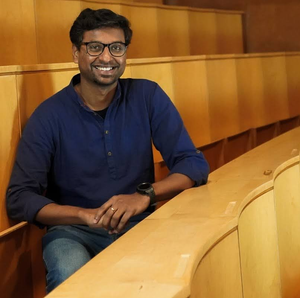
Together with other researchers, primarily from Danish universities, Raghav and Sebastian have now published two papers, the first of which was also presented at the EurIPS conference in Copenhagen in December.
“A great deal has happened since the Visit Grant, which is a nice DDSA initiative,” Raghav reflects.
Sebastian adds:
“Spending several weeks together – which the Visit Grant made possible – developing ideas and working with data can lead to a great deal. In our case, it certainly did. We currently have three new projects under way focusing on sustainable AI.”
The collaboration has since deepened: Sebastian and Raghav are now jointly supervising a PhD student based in Linköping who will regularly visit Copenhagen.
Read their accepted papers here:
FAccT 2026: How Hyper-Datafication Impacts the Sustainability Costs in Frontier AI